ZTL fines in Italy: cost, how they reach you, and how to contest them
The amount is set by national law, not by the town, and since December 2024 a single zone can fine you only once a day. Here is what a ZTL fine costs, how it reaches a visitor, and what you can do about it.
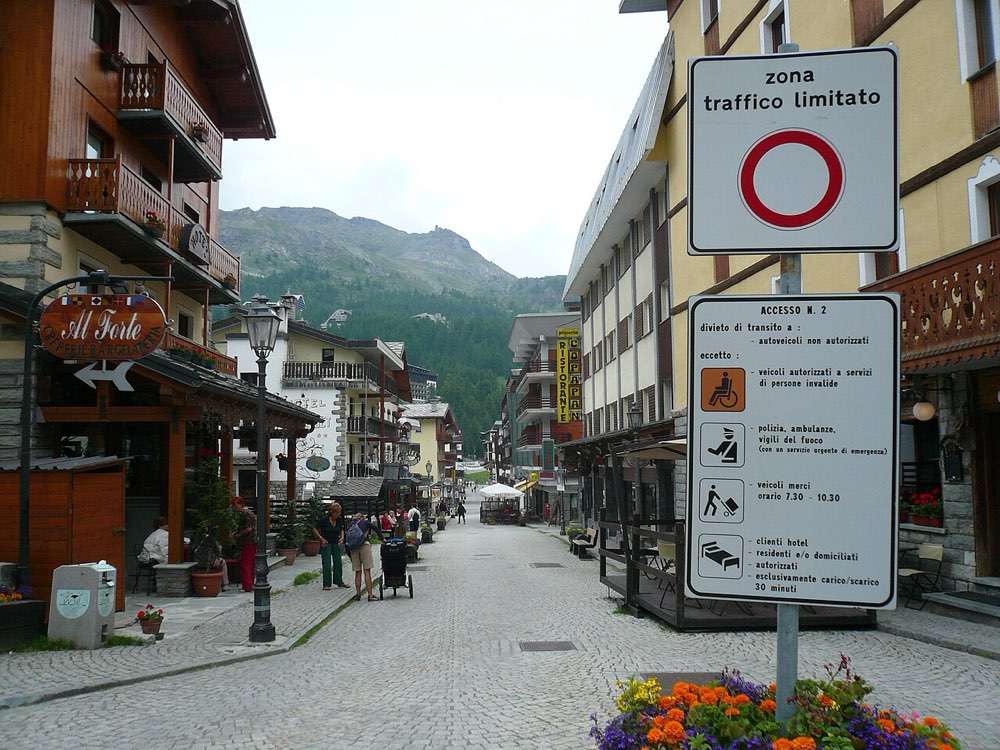
How much is a ZTL fine?
Entering a ZTL without authorisation is a breach of article 7 of the Italian Highway Code, the Codice della Strada, and the penalty it sets is €83 to €332. The range is national: a Comune does not choose its own amount. What you actually pay depends on when you pay it:
- Within 5 days of the notice being served: the minimum, reduced by 30% — €58.10.
- Within 60 days: the minimum, €83.
- Neither paid nor contested within 60 days: the notice becomes enforceable for half the maximum — €166.
The costs of tracing you and serving the notice are added to each of these, so the figure on the notice will be higher than the bare penalty. Those are the amounts in the Code as it stands in September 2026; the figure printed on your notice is the one that counts.
One fine per zone per day — since December 2024
For years the standard warning was that every gate is a separate fine: drive in through one camera, get lost, leave through another, and two or three penalties would follow. That changed with the reform of the Highway Code that came into force on 14 December 2024. Where the violations are recorded by camera, repeated breaches of the same restriction in the same ZTL now bring one fine for each calendar day — even if the zone has several time bands in the day, or a band that runs past midnight.
That is a real improvement, but it is narrower than it sounds. The fines still multiply in three ways:
- A different zone is a different fine. Many cities run more than one ZTL — Rome and Naples have several each — and crossing into a second one is a second violation.
- A different day is a different fine. Drive to a hotel inside the zone on Monday and out again on Wednesday without your plate registered, and you face a fine for each day you crossed a gate.
- The rental company’s fee is charged per notice, so every fine that does arrive carries its own.
How the fine reaches you
If you were driving your own car, the verbale — the official penalty notice — is posted to the address registered to the plate. For a visitor in a hire car the route is longer and more expensive:
- The camera records the plate, and the Comune traces it to the registered keeper — the rental company.
- The rental company identifies you from the rental agreement, and the notice is then served on you.
- The company almost always charges an administration fee for identifying you, commonly in the region of €25–€50, taken from the card it holds.
How long the fine takes to arrive
Nothing happens at the roadside, nothing happens that week, and for most visitors nothing happens that month. The law gives the Comune 90 days to serve the notice once it has identified the driver, and 360 days from the violation when the person lives outside Italy. With a hire car in the chain, a card charge from the rental company several months after the trip, followed later by the notice itself, is entirely normal.
So a quiet fortnight is not the all-clear. If you think you may have crossed a gate, assume you did, and keep the rental agreement and your travel dates until well after the trip. A notice served after the legal period has run out is one of the few grounds on which an appeal succeeds.
What the rental company adds on top
The penalty is only part of what you pay. The rental company’s fee for identifying the driver is separate from the fine, it is set by the company rather than by any authority, and it is charged per notice. So a single trip can produce:
- the penalty itself, set by national law;
- the costs of serving the notice;
- an administration or “driver identification” fee from the rental company;
- and all of the above again for each further zone or day.
The administration fee is usually disclosed in the rental terms you agreed to at the desk, and rarely mentioned out loud. If you want to know what you are exposed to before you drive, that clause is the one to find.
Can you contest it?
Yes. There are two routes, and you choose one or the other:
- An appeal to the Prefetto, the state’s local representative, within 60 days of the notice being served. It is an administrative appeal and costs nothing to file.
- An appeal to the Giudice di Pace, the local magistrate, within 30 days — or 60 days if you live outside Italy. This is a court case, with a court fee.
Paying and appealing are alternatives: once you pay, you can no longer appeal, and while an appeal runs you give up the early-payment discount. An appeal that fails can also leave you owing more than the minimum you would have paid.
An appeal has a chance where something is wrong with the process or the evidence:
- the signs were missing, obscured, or did not comply with the rules;
- the zone was not active at the time recorded;
- the notice was served after the legal period;
- the plate was misread, or the vehicle was not yours at the time;
- you held a valid authorisation — for example a hotel registration — that was not recorded;
- you were fined more than once for the same zone on the same day.
What does not work is not having known. “I did not realise it was a restricted zone” is not a defence anywhere in Italy, and neither is having followed a sat-nav. The sign is the legal notice, and the enforcement is automatic precisely so that intent does not come into it.
When contesting is not worth it
For most visitors it is not. An appeal has to be made in Italian, within a short window, from abroad, and the saving at stake is small: the difference between €58.10 paid promptly and a challenge that may fail. If you were plainly in the zone and there is no defect in the notice, paying within five days is usually the cheapest outcome available.
The exception is the one-fine-a-day rule. If notices arrive for several crossings of the same zone on the same day, that is worth raising with the Comune that issued them before you pay them all.
What happens if you ignore it
Ignoring a notice does not make it go away. After 60 days it becomes enforceable for half the maximum penalty plus costs, and the rental company will in most cases simply take what it is owed from the card it holds, under a clause in the rental contract. Italian authorities also serve notices abroad as a matter of routine, which is what the 360-day period exists for.
If a charge appears on your card months later with no explanation, ask the rental company for the underlying notice: the date, the time, the place and the issuing authority. You are entitled to know what you are being charged for, and that document is what any query depends on.
Scams exist too. Be wary of any “fine handling” email that does not come from your rental company or the Comune, and never pay a fine through a link you were not expecting.
How to make sure it never happens
All of this is avoidable at no cost. Check your destination before you drive, park outside the restricted area, and walk in. Many Italian cities have built genuinely good machinery for exactly this — Perugia has escalators running up through a buried fortress, Orvieto a lift cut through the rock, Bergamo a funicular into the walled upper town. Look your city up on the ZTL map the night before, not at the junction, and read how to avoid a ZTL fine for the rest.
Sources
Amount: Codice della Strada (D.Lgs. 285/1992), art. 7, comma 14. One fine per zone per day: art. 198, comma 2-bis, added by Law 177 of 25 November 2024, in force 14 December 2024. Payment within 5 and 60 days: art. 202. Notification within 90 and 360 days: art. 201. Appeal to the Prefetto, and enforcement at half the maximum: art. 203. Appeal to the Giudice di Pace within 30 or 60 days: art. 204-bis and D.Lgs. 150/2011, art. 7, comma 3. This is general information, not legal advice; read the notice you receive, which states the deadlines that apply to you.
Check your destination before you drive.
Open the interactive ZTL mapMore driving guides
- Driving in Italy: the complete guide to ZTL zones
- How ZTL cameras work — and why rental cars always get caught
- ZTL signs in Italy: what they look like and what they mean
- Italy’s Euro 5 diesel ban from 1 October 2026: where it really applies
- How to avoid a ZTL fine: parking and route planning in Italy
- Renting a car in Italy: the complete guide (ZTL, tolls, fuel & permits)
- Italy’s driving zones explained: ZTL, Milan’s Area C & Area B, and LEZs
- Staying at a hotel inside a ZTL: how to reach it without a fine
- Driving in Rome & Florence: ZTL and parking survival guide
- Blue Badge and ZTL zones: driving in Italy
- Tuscany road trip: ZTLs, parking and routes
- Lake Garda by car: ZTLs on all three shores
- Puglia road trip: ZTLs from Bari to Lecce
- Sicily road trip: ZTLs from Palermo to Siracusa
- Driving in Milan: Area C, Area B and the streets no ticket opens
- Naples and the Amalfi Coast: ZTLs, plate days and where the car stops