How ZTL cameras work — and why rental cars always get caught
ZTL enforcement is fully automatic, with no barrier and no officer. Understanding how the cameras work is the key to never being surprised by one.
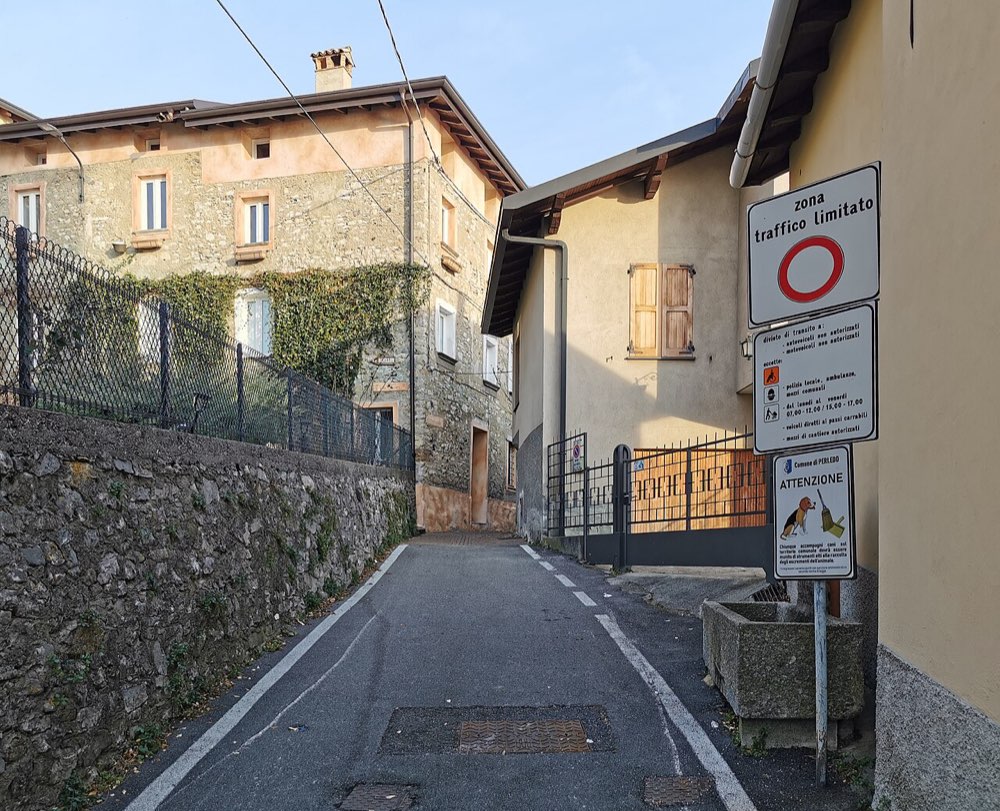
The cameras at the gates
ZTL enforcement is automatic. At each entrance to the zone — each varco — there is a camera mounted above or beside the road, usually with a sign reading “varco attivo” (gate active) and a light showing whether enforcement is currently on. These cameras use ANPR (Automatic Number Plate Recognition) to read the plate of every vehicle that passes.
The plate is checked against a database of authorised vehicles — residents, permit holders, registered businesses and so on. If your plate is not on the list and the zone is active, the system records the entry and a fine is generated automatically. No officer is involved, and nothing stops you at the moment you drive in.
Why there is no warning
Unlike a car-park barrier or a toll booth, a ZTL gate does not physically prevent entry. The only warning is the signage, and on a busy historic street it competes for your attention with pedestrians, cyclists, delivery vans and your own navigation. Many drivers do not realise they have entered a ZTL until a fine arrives. This is why simply “being careful” is not enough — you need to know where the zones are before you drive.
Why rental cars always get caught
There is a persistent myth that hire cars are somehow exempt. They are not. The chain is simple:
- The camera reads the plate; the system neither knows nor cares who is driving.
- The fine goes to the vehicle’s registered keeper — the rental company.
- The rental company has your details from the booking and passes the cost to you, typically with an admin fee.
If anything, rental drivers are more likely to be fined, because they are usually unfamiliar with the city and more likely to drift into a restricted street by mistake. For what those fines cost, see our guide to ZTL fines in Italy.
Permits and plate registration
There is one legitimate way to drive into a ZTL: be on the authorised list. For visitors this almost always means a hotel inside the zone registering your number plate with the comune for the dates of your stay. Many city-centre hotels do this routinely, but you must give them your exact plate and arrival details in advance — registering after you have already passed the camera does not always cancel the fine. Always confirm with the hotel exactly what they will register, and for which days.
The bottom line
Treat every historic centre as camera-enforced unless you have specific authorisation. Check the zone on our ZTL map, park outside, and walk in. For the full avoidance strategy, read how to avoid a ZTL fine.
Reading the sign at the gate
Every ZTL entrance carries the same round sign: a white disc with a red border, usually with a plate beneath it setting out the hours and the exemptions. On many gates there is also an electronic display, and that display is the thing worth learning to read, because it tells you the state of the gate right now rather than in general.
The two phrases to recognise are varco attivo and varco non attivo. Varco means gate or opening. Attivo means the restriction is live and the camera is enforcing; non attivo means it is currently open. Displays are often colour-coded as well, red for active and green for open, but the wording is the part that does not vary. Newer displays say ZTL attiva and ZTL non attiva instead, often with ZTL closed and ZTL opened in English — every panel on the pole is explained in our guide to ZTL signs in Italy.
Two warnings about relying on the display. It is small, it is usually mounted at the roadside rather than overhead, and you will be reading it while negotiating an unfamiliar junction. And a gate showing non attivo is open at that moment — it tells you nothing about when it switches back, which matters a great deal if you were planning to drive out again later.
What the camera actually records
The equipment at a gate is an automatic number plate recognition camera. As a vehicle passes, it photographs the plate, converts it to text, and timestamps the crossing. That record is checked against the list of authorisations held by the Comune — residents, permit holders, taxis, delivery vehicles, and any plates temporarily registered by hotels for their guests.
If your plate is not on the list and the gate was active, the record becomes a violation. No human is involved at the moment of the crossing, which is why there is no flash you would notice, no beep, and nobody stepping into the road. The absence of any reaction is not evidence that nothing happened.
This is also why a valid authorisation has to exist before you cross. The check is made against the list as it stood at that timestamp. A hotel adding your plate the following morning does not retroactively make the crossing lawful.
Why turning round does not help
This is the single most common misunderstanding, and it costs people money. The violation is the act of crossing the line under the camera. Once the plate has been read, the record exists. Reversing back out, doing a U-turn twenty metres in, or realising your mistake at the next corner changes nothing at all about the entry that has already been recorded.
Nor does it help to hurry out through the nearest gate. Every crossing is recorded; what changed in December 2024 is how many of those records become fines, which is covered below. The danger in a panicked search for the way out is the one that has not changed: in a city with several zones, the next wrong turn can take you into a different one.
If you realise you have entered a ZTL, the right response is to keep going calmly, leave by the most direct route, and accept that the crossing has happened. Do not attempt to undo it.
Several gates, one fine a day — per zone
A ZTL is not a single boundary with one camera on it. Larger zones have gates at every entry point — Florence has around twenty around its ring of avenues — and each one records every plate that passes.
Until December 2024 each of those crossings could become its own penalty, which is how a single wrong turn used to turn into a bill several times the headline figure. The reform of the Highway Code that came into force on 14 December 2024 changed that: where the violations are recorded by camera, repeated crossings of the same zone on the same calendar day now bring one fine.
The fines still multiply across zones and across days. Cities such as Rome and Naples run several separate ZTLs, and each one you enter is a separate violation; drive in on two different days and that is two fines. The rental company’s fee is charged on each notice that arrives. ZTL fines in Italy sets out what each costs.
None of this makes a quick crossing safe. There is no version of driving through a restricted centre that avoids the fine; staying out entirely is the only approach that costs nothing.
Cameras you cannot see
Do not expect the camera to be obvious. Equipment is generally mounted on a pole or a bracket at the roadside, sometimes on a building, and it is not always directly beside the sign. Some gates have several units covering different lanes. In a few cities the housings are deliberately unobtrusive.
The sign is the legal notice, not the camera. If the round white disc is there, treat the restriction as enforced regardless of whether you can spot the hardware. The converse also holds: some zones have gates that are not currently switched on — our data for Taormina, for example, records the cameras as inactive — but a gate that is unenforced in one season can be live in the next, and that is not something to plan a trip around.
Why your sat-nav will not save you
Navigation software routes for distance and time. Unless you have explicitly turned on a restricted-zone warning, and unless the app holds current ZTL data for that town, it will happily send you straight through a closed historic centre because that is the shortest way to the address you typed in.
Coverage of Italian ZTLs in consumer navigation apps is patchy and the boundaries change with local ordinances. Treat any warning you do get as a bonus rather than as a safety net, and do the checking yourself: look the destination up on the ZTL map before you set off, pick a car park outside the zone, and navigate to that instead of to the hotel door.
Check your destination before you drive.
Open the interactive ZTL mapMore driving guides
- Driving in Italy: the complete guide to ZTL zones
- ZTL fines in Italy: cost, how they reach you, and how to contest them
- ZTL signs in Italy: what they look like and what they mean
- Italy’s Euro 5 diesel ban from 1 October 2026: where it really applies
- How to avoid a ZTL fine: parking and route planning in Italy
- Renting a car in Italy: the complete guide (ZTL, tolls, fuel & permits)
- Italy’s driving zones explained: ZTL, Milan’s Area C & Area B, and LEZs
- Staying at a hotel inside a ZTL: how to reach it without a fine
- Driving in Rome & Florence: ZTL and parking survival guide
- Blue Badge and ZTL zones: driving in Italy
- Tuscany road trip: ZTLs, parking and routes
- Lake Garda by car: ZTLs on all three shores
- Puglia road trip: ZTLs from Bari to Lecce
- Sicily road trip: ZTLs from Palermo to Siracusa
- Driving in Milan: Area C, Area B and the streets no ticket opens
- Naples and the Amalfi Coast: ZTLs, plate days and where the car stops