Italy’s driving zones explained: ZTL, Milan’s Area C & Area B, and LEZs
Italy has several different kinds of restricted-driving zone, and they are not the same thing. Here is how to tell them apart.
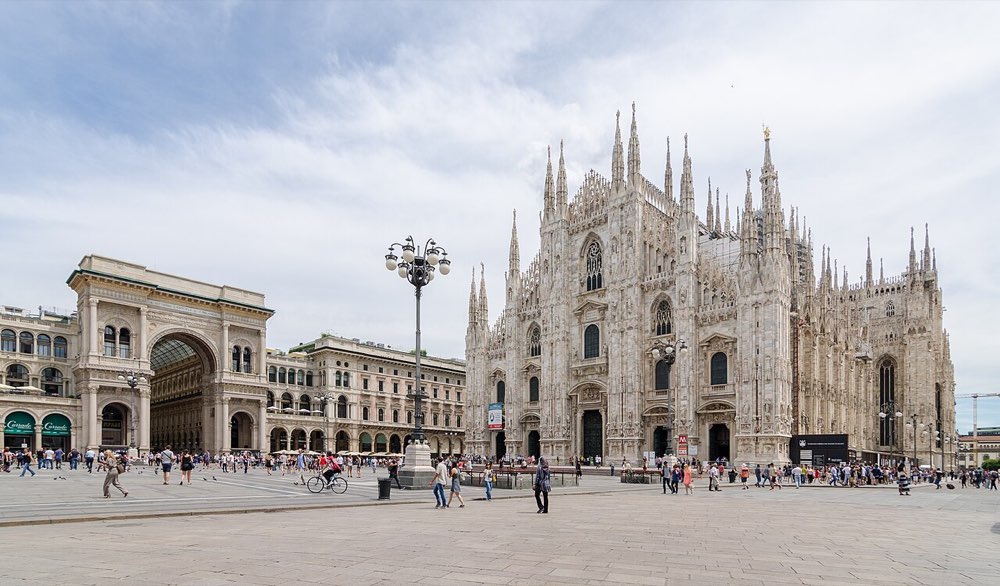
Why this is confusing
Italy uses several overlapping schemes to control traffic in its cities, and visitors often lump them all together as “the ZTL.” They are not the same: some restrict who can drive, others charge a fee, and others restrict which engines are allowed. Knowing which is which tells you whether you can enter, and whether it costs anything.
ZTL — Limited Traffic Zone
The ZTL (Zona a Traffico Limitato) is the most widespread. It restricts who may drive in an area — almost always a historic centre — during set hours. Only authorised vehicles (residents, permit holders, taxis, deliveries) may enter; everyone else is fined automatically by camera. A ZTL is not a charge you can pay to enter: if you are not authorised, you simply should not drive in. This is the zone our map covers, and the one most likely to catch a visitor — see our complete ZTL guide.
Driving into Milan itself? Driving in Milan works through Area C, Area B and the central ZTLs for a single trip, and the Milan ZTL map shows where each one runs.
Area C — Milan’s congestion charge
Area C is Milan’s congestion charge, covering the city’s historic centre (the Cerchia dei Bastioni). Unlike a normal ZTL, it is a paid-entry scheme: most drivers can enter during operating hours by buying a daily ticket, while the most polluting vehicles are banned outright. Since 1 January 2026 the charge applies every day, weekends included, not just on weekdays — a change a lot of advice has not caught up with. It is camera-enforced. So in Milan’s centre you may be allowed in if you pay — which is different from a standard ZTL, where payment is not an option.
Area B — Milan’s low-emission zone
Area B is a much larger low-emission zone covering almost all of Milan, not just the centre. It does not charge a fee; instead it bans older, more polluting vehicles (by Euro emission class) from entering or circulating during operating hours. A modern petrol hire car is usually fine, but an older diesel may be restricted. Area B and Area C overlap in the centre, so there you can be subject to both at once.
LEZs and other low-emission rules
Beyond Milan, other Italian regions — particularly across the Po Valley (Piedmont, Lombardy, Veneto, Emilia-Romagna) — run seasonal low-emission restrictions that ban older diesel vehicles on certain days, especially in winter when air quality is poor. These are not aimed only at local cars. They apply to every vehicle inside the built-up area regardless of where it is registered, so a foreign-plated diesel is caught by them just as a local one is. They also cover the whole town, not just the historic centre — which means a ZTL permit, or parking outside the ZTL entirely, does nothing to exempt you. If you are driving an older diesel in the north between roughly October and March, check the current threshold for the specific comune before you travel; several step up again on 1 October 2026.
How to tell which applies to you
- Restricts who can drive; historic centre; camera at each gate → a ZTL. Don’t enter unless authorised.
- You can pay a daily fee to enter Milan’s centre → Area C.
- Your (older) car is banned from a wide area of Milan → Area B.
- Seasonal diesel bans in northern regions → regional low-emission rules.
For visitors in a typical modern rental, the ZTL is by far the most important to watch. Check your destination on the ZTL map, and if you are driving in Milan specifically, look up Area C and Area B before you go.
Scheme names, boundaries and rules are set by each city and region and change over time. Always confirm the current rules with the relevant Comune before driving.
ZTL, and why it is the one that matters most
The Zona a Traffico Limitato is the restriction a visitor is overwhelmingly most likely to meet, because almost every Italian town of any age has one and because it applies regardless of what you are driving. It is not about emissions, it is not about congestion pricing, and paying something does not get you in. Either your plate is on the authorised list or it is not.
That is the crucial difference from the other schemes below. A ZTL cannot be complied with by buying a ticket or by driving a newer car. The only routes in are being a resident, holding a permit, or having your plate temporarily registered by a property inside the zone.
Milan’s Area C and Area B
Milan is the exception to most of what this site says, because two city-wide schemes sit on top of the ordinary picture and work on completely different principles. It has conventional ZTLs as well — the Quadrilatero della Moda is closed around the clock, and several Navigli streets are closed at night — but the two schemes below are what a visitor meets first.
Area C covers the historic centre inside the ring of the old bastions. It is essentially a congestion charge: on the days and hours it operates, you pay to enter, and having paid, you may drive in. That makes it unlike a ZTL in the most important respect — it is a price rather than a prohibition.
Area B is much larger, covering most of the built-up city, and it is a low-emission zone. It works the opposite way round: it does not matter whether you are willing to pay, it matters what your vehicle is. Older and more polluting vehicles are excluded during its operating hours regardless.
For a visitor in a modern hire car, Area B is usually satisfied automatically and Area C is a payment to make if you intend to drive into the middle. Both schemes have their own hours, exemptions and registration arrangements, and the emissions thresholds tighten on published dates, so check the current position before relying on any of this. See ZTL Milan for how the schemes fit together.
Low-emission zones elsewhere
Milan is not the only city with vehicle-based restrictions. Across the Po valley in particular — the flat, industrial north where winter air quality is genuinely poor — regional and municipal authorities impose seasonal limits on older diesel and petrol vehicles, typically from autumn through to early spring, and tighten them further on days when pollution exceeds thresholds.
These schemes are set at regional level, they vary between Lombardy, Piedmont, Veneto and Emilia-Romagna, and the emergency measures can be announced at a few days’ notice. A recent hire car will almost always comply. If you are driving your own older vehicle into northern Italy in winter, this is worth checking properly.
Pedestrian areas
An Area Pedonale is the strictest category: no vehicles at all, not merely restricted ones. These are usually the innermost streets of a historic centre — a cathedral square, a main shopping street, a market area — and they often sit nested inside a wider ZTL, so you can pass from one regime to a stricter one without leaving the old town.
Several cities in this guide have exactly that arrangement. Ravenna has a pedestrian core around Piazza del Popolo inside its broader zone; Pistoia’s pedestrian centre is closed around the clock; Bolzano has pedestrian squares within its restricted centre. Brescia goes further and operates four different categories of area across one old town.
There are also streets where pedestrians have priority but limited traffic is tolerated at walking pace. In practice, if there are people walking down the middle of the road, that is the answer regardless of the category.
Restrictions that are not signposted as zones
A few limits do not fit any of the categories above and still catch visitors out. Mountain valleys in the Dolomites and elsewhere have introduced summer access schemes and booking requirements to control visitor traffic on popular roads. Some coastal and island roads limit vehicle numbers in high season. Alpine passes close in winter, on dates that move with the snow.
None of these are ZTLs and none will appear on a ZTL map. They are set locally, they change from year to year, and the only reliable approach is to check the specific valley, island or pass you intend to drive rather than the town you are leaving.
Which of these will actually affect you
For most visitors driving a recent hire car, the ranking is straightforward:
- ZTL — will affect you, in almost every historic town you visit. This is the one to plan around.
- Pedestrian areas — will affect you, but are usually self-evident on the ground.
- Area C in Milan — affects you only if you drive into central Milan, and can be paid.
- Low-emission zones — usually satisfied automatically by a modern rental; a real issue in an older private vehicle.
- Seasonal and valley schemes — affect you only where you are going somewhere specific that operates one.
The practical summary has not changed: park outside the historic centre and walk in. That single habit resolves the ZTL, the pedestrian area and most of the rest at once. Check your destination on the ZTL map before you set off.
Check your destination before you drive.
Open the interactive ZTL mapMore driving guides
- Driving in Italy: the complete guide to ZTL zones
- ZTL fines in Italy: cost, how they reach you, and how to contest them
- How ZTL cameras work — and why rental cars always get caught
- ZTL signs in Italy: what they look like and what they mean
- Italy’s Euro 5 diesel ban from 1 October 2026: where it really applies
- How to avoid a ZTL fine: parking and route planning in Italy
- Renting a car in Italy: the complete guide (ZTL, tolls, fuel & permits)
- Staying at a hotel inside a ZTL: how to reach it without a fine
- Driving in Rome & Florence: ZTL and parking survival guide
- Blue Badge and ZTL zones: driving in Italy
- Tuscany road trip: ZTLs, parking and routes
- Lake Garda by car: ZTLs on all three shores
- Puglia road trip: ZTLs from Bari to Lecce
- Sicily road trip: ZTLs from Palermo to Siracusa
- Driving in Milan: Area C, Area B and the streets no ticket opens
- Naples and the Amalfi Coast: ZTLs, plate days and where the car stops