How to avoid a ZTL fine: parking and route planning in Italy
Almost every ZTL fine is avoidable with a little planning. Here is the simple strategy that keeps you out of the camera’s view.
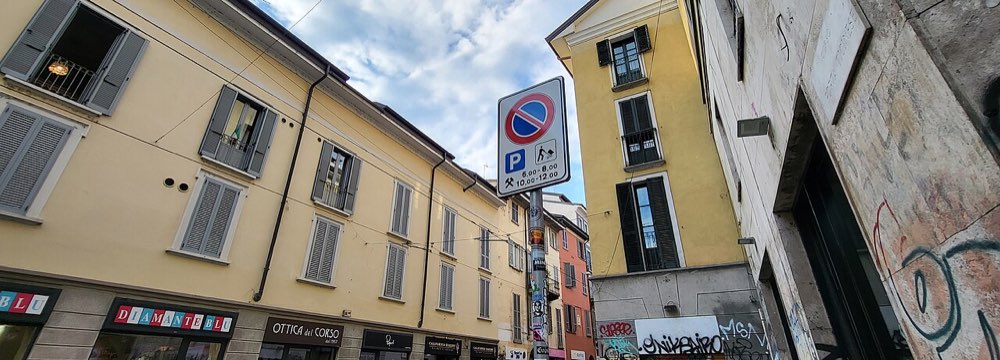
The one rule that prevents almost every fine
If you remember nothing else: do not drive into an Italian historic centre — park on the edge and walk in. Centres are small, walkable and far more pleasant on foot than from behind a windscreen, and parking outside the ZTL costs a fraction of even a single fine.
Use park-and-ride
Almost every Italian town with a ZTL provides parking just outside it, frequently signposted with a blue “P”. Larger cities run dedicated park-and-ride sites (look for “parcheggio scambiatore”) with cheap all-day parking and a bus, tram or short walk into the centre. Arriving by mid-morning is wise in tourist cities, as edge car parks fill up.
Check the zone before you set off
Plan your parking before you are in the car and under pressure. Our interactive ZTL map shows the restricted area for cities across Italy, so you can see exactly where the no-go zone is and choose a car park outside it. Look at it the night before, not at the last junction.
Don’t rely on your sat-nav alone
Navigation apps are improving, and some now flag ZTLs or offer to avoid them, but coverage is incomplete and not always current. A sat-nav will happily route you straight through a historic centre to save a few minutes. Use it for the journey, but make the final decision about where to stop yourself, based on the signs and your own check of the zone.
If your hotel is inside a ZTL
Sometimes you genuinely need to reach an address inside the zone — to drop luggage, for example. In that case:
- Contact the hotel before you arrive and ask whether they can register your number plate with the comune for your dates.
- Give them your exact plate and arrival/departure information in writing.
- Ask precisely which days and gates the registration covers.
- If they cannot register you, ask where they recommend parking and whether there is a brief loading window for luggage.
Never assume a hotel reservation alone gives you the right to drive in — only a registered plate does.
A quick pre-trip checklist
- Check your destination on the ZTL map and note where the zone is.
- Pick a car park outside the zone in advance.
- Watch for round Zona Traffico Limitato signs and “varco attivo” lights.
- If staying inside a ZTL, arrange plate registration with your hotel beforehand.
- When in doubt, stop, park and walk — it is always cheaper than driving in.
For background on why this matters so much, see how much ZTL fines cost and how the cameras catch you.
Reading the lines on the road
Italian kerbside parking is colour-coded, and the colours mean the same thing across the country. Learning three of them removes most of the uncertainty about whether you are allowed to leave the car where you have just left it.
- Blue lines — paid parking. Find the meter (parcometro), pay for the period you need, and display the ticket on the dashboard. Charges usually apply during stated hours only, so read the sign; outside those hours the same space is often free.
- White lines — free parking, but frequently reserved for residents in and around historic centres. This is the one that catches visitors, because free-looking spaces near the middle of an old town are very often permit-only. The sign is what decides it, not the paint.
- Yellow lines — reserved. Residents, disabled badge holders, loading, buses or taxis depending on the sign. Do not use these.
Where a machine issues a paper ticket, put it face up on the dashboard where it can be read through the windscreen. Some cities also use scratch cards or phone apps; if you are staying more than a day, ask your accommodation which system the town uses, because it varies more than the line colours do.
The cities that have solved this for you
A surprising number of Italian towns have built proper machinery to move visitors from a car park into a restricted centre, precisely because the geography forced them to. Where it exists it is cheap, quick and completely removes the ZTL from your day.
- Perugia — park at Piazza Partigiani and ride escalators up through the buried Rocca Paolina into the centre, or use the minimetrò from the large car park at Pian di Massiano.
- Orvieto — a lift cut up through the rock from Campo della Fiera, or the funicular from the station on the valley floor.
- Bergamo — leave the car in the lower town and take the funicular into the walled upper town.
- Florence — the Villa Costanza park-and-ride out where the motorway meets the city, with a tram running into the centre.
- Cortona and Siena — car parks around the walls with escalators or lifts assisting the climb.
- Taormina — the Lumbi car park with a shuttle bus into the centre.
The pattern is consistent enough to be a rule of thumb: if a town is on a hill or behind walls, there is usually an official way up from a car park at the bottom, and it is usually signposted from the approach road. Look for it before you improvise.
Do the checking the night before
The single most effective habit is also the least dramatic. The evening before you drive somewhere, look the town up on the ZTL map, see where the restricted area sits, choose a car park outside it, and save that car park — not the hotel — as your navigation destination.
Three minutes at a kitchen table is worth more than any amount of vigilance at an unfamiliar junction with a queue behind you. It also means the decision is made when you are calm, rather than at the moment you are least equipped to make it.
If you are moving between towns each day, do them all at once at the start of the trip. The list of car parks becomes your itinerary.
Garages, street spaces and the trade-off
Multi-storey garages on the edge of a centre cost more per hour than street parking further out, and they are almost always worth it for a short visit. They are signposted, they have space when the streets do not, and they remove the risk of misreading a line colour in a town you do not know.
Street parking makes more sense for a longer stay, or where a town is small enough that ten minutes further out is genuinely ten minutes. Italian historic centres are compact; the difference between the nearest car park and one a few streets back is usually negligible on foot and substantial in both cost and stress.
Whichever you choose, note the height restriction before you drive into a garage. Older Italian car parks were not built for modern SUVs, and the barrier at the entrance is an unforgiving way to discover this.
If your accommodation is inside the zone
Being allowed to reach a property is not the same as having somewhere to leave the car. Hotels inside a ZTL can usually register your plate with the Comune for temporary access to unload, but the car then has to go somewhere, and that somewhere is generally a car park outside the zone.
Ask both questions when you book: can you register my plate, and where do I park afterwards. The second answer is the one that shapes your day. For the full process, see staying at a hotel inside a ZTL.
A short checklist
- Check the destination on the map the night before, not at the junction.
- Navigate to a car park outside the zone, not to the address.
- Blue lines paid, white often residents-only, yellow reserved — read the sign.
- Look for the funicular, lift, escalator or shuttle; hill towns usually have one.
- Display the ticket on the dashboard where it can be seen.
- Check the height limit before entering a garage.
- If staying inside a zone, arrange plate registration in advance and ask where the car goes.
Check your destination before you drive.
Open the interactive ZTL mapMore driving guides
- Driving in Italy: the complete guide to ZTL zones
- ZTL fines in Italy: cost, how they reach you, and how to contest them
- How ZTL cameras work — and why rental cars always get caught
- ZTL signs in Italy: what they look like and what they mean
- Italy’s Euro 5 diesel ban from 1 October 2026: where it really applies
- Renting a car in Italy: the complete guide (ZTL, tolls, fuel & permits)
- Italy’s driving zones explained: ZTL, Milan’s Area C & Area B, and LEZs
- Staying at a hotel inside a ZTL: how to reach it without a fine
- Driving in Rome & Florence: ZTL and parking survival guide
- Blue Badge and ZTL zones: driving in Italy
- Tuscany road trip: ZTLs, parking and routes
- Lake Garda by car: ZTLs on all three shores
- Puglia road trip: ZTLs from Bari to Lecce
- Sicily road trip: ZTLs from Palermo to Siracusa
- Driving in Milan: Area C, Area B and the streets no ticket opens
- Naples and the Amalfi Coast: ZTLs, plate days and where the car stops