Sicily road trip: ZTLs from Palermo to Siracusa
Everywhere else on this site, there is usually an alternative to driving: a train between the cities, a bus up the hill. Sicily is where that stops being true. The island is large, the distances are real, and the places worth stopping are not reliably connected to one another — so for most visitors the car is not a preference, it is the trip. Which makes the only useful question not whether to drive, but where the car has to stop.
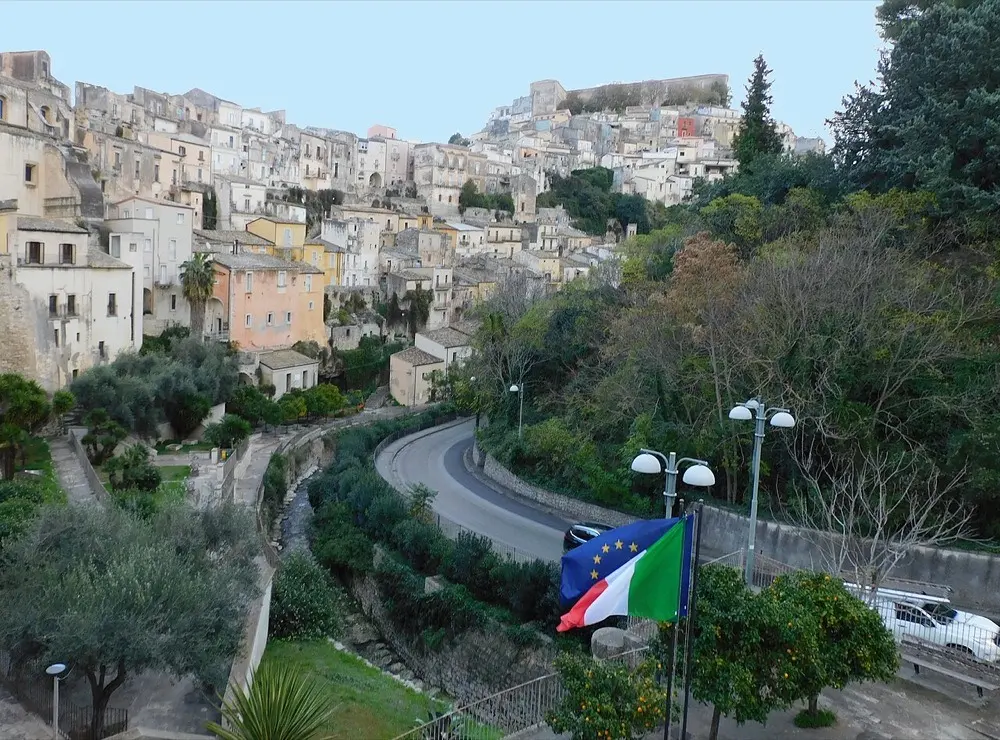
The island where the car is not optional
Sicily is roughly the size of Wales with the population of Denmark spread unevenly across it, and the interior is mountainous. Coastal towns are strung along two long routes and the places between them — the baroque towns of the south-east, the temples on the south coast, Etna’s flanks — are a car’s work. That is the opposite of the advice this site gives for Rome or Venice, and it changes what a ZTL means here. It is not a reason to leave the car at home. It is a line you cross on foot at the end of each day’s drive.
What follows is what each town actually restricts, drawn from what we hold on the sixteen Sicilian zones in our data, and — because this is a thinly documented island — an honest account of the towns we cannot yet tell you about.
Sicily closes for the evening, not the working day
Northern Italian ZTLs mostly follow office hours: the gate shuts in the morning, opens in the evening, and the pattern matches a commute. Sicily inverts that, and once you see it the island gets much easier to plan.
Look at the timetables together. Ortigia runs until 02:00. Via Atenea in Agrigento closes from 17:00 to midnight, and to 02:00 on Friday and Saturday. Giardini Naxos shuts its seafront at around half past seven in the evening and reopens after midnight. Ragusa Ibla’s seasonal zones switch on for weekend and holiday evenings. In each case the restriction tracks the passeggiata — the evening walk, when the centre fills with people on foot and the car becomes the intruder.
The practical consequence is a reversal of the instinct most visitors arrive with. In much of Europe, driving into a historic centre after dinner feels like the safe, quiet option. In Sicily it is the single most reliable way to be fined.
Catania: the airport city with no open hour
Most eastern Sicilian trips begin at Fontanarossa, and Catania’s historic core is restricted 24 hours a day, every day, behind cameras at via Sant’Agata and via Landolina. There is no window to wait for. Inside it sits a fully pedestrian area — Piazza Bellini, via Teatro Massimo, via Coppola, via Rapisardi and their neighbours — which is stricter again.
The mistake here is not usually a deliberate drive into the centre. It is arriving with a car collected twenty minutes earlier, following a phone towards a hotel, and meeting a gate in traffic that gives you nowhere to reconsider. Catania’s streets are narrow, one-way and busy enough that a wrong turn is not easily undone. If the city is a stop rather than a transit, park outside the zone and walk in; if it is a transit, the car belongs on the ring road and then the motorway.
Siracusa: one decision, made before the bridge
Ortigia, the old town of Siracusa, is an island joined to the mainland by two short bridges, and almost all of it is restricted. The geography does you a favour: the gates sit just beyond the bridges, so there is exactly one decision to make and you make it before crossing.
The hours are Monday to Saturday 11:00–15:30 and 17:00–02:00, and Sundays and holidays 10:00–02:00, under O.D.C.S. 189 of 30 March 2026. A lighter winter ordinance replaces them each year. Two things follow. Ortigia is restricted every day, not just at weekends, so a Tuesday lunchtime arrival is inside it. And the zone runs late rather than early: the moment you most want to drive in, to reach a restaurant or a hotel after dark, is exactly when it is live.
The Molo Sant’Antonio car park sits on the mainland side immediately before the Santa Lucia bridge and is the obvious answer — it is a two-minute walk across, and the island is only about a kilometre long. Where a car park lies beyond a gate, follow the signed route to it rather than a mapping app’s shortest line.
Taormina: restricted on paper, unresolved in practice
Our record for Taormina covers three zones across the hilltop centre around Corso Umberto, continuously restricted — and it also notes that the camera gates, repeatedly announced, have not been reported active. We are not going to tidy that into a confident claim in either direction. Activation has been announced since 2021 and the reporting we can find stops in October 2024, which means the honest status is “unresolved, verify at the gate”.
It matters less than it sounds, because Taormina answers the question physically. Corso Umberto runs between Porta Messina and Porta Catania and is pedestrian in practice for most of its length; the lanes off it are stepped or barely a car wide. The Lumbi multi-storey on the northern approach has a shuttle into the centre, and Porta Catania at the southern end puts you at the gate. In high summer both fill, and the queue up the hairpins is long enough that arriving early, or coming up from the coast by bus or cable car, is the better plan whatever the cameras are doing.
Ragusa Ibla: lettered zones on two timetables
Ragusa is two towns on two hills either side of a gorge, and the lower, older one carries several lettered zones that do not share a timetable. Zones O, D and E run 24 hours a day, all year. Zones A and B are seasonal, switching on for Saturday, Sunday and holiday evenings. Zone C is currently suspended.
So “is Ibla open?” is not answerable without knowing which gate you are approaching. The seasonal dates move between years by ordinance, which is why we do not quote them here: read the current one. The circonvallazione around Ibla stays open at all times, which is how you reach the far side without crossing a gate at all — and since Ibla is steep, stepped and medieval in layout, parking in the upper town and walking down is the pleasant direction anyway.
Agrigento: hours that moved in July 2026
Via Atenea and its side streets are restricted 09:30–14:30 and 17:00–24:00 Monday to Thursday and on Sunday, and 09:30–14:30 and 17:00–02:00 on Friday and Saturday, watched by a single camera at Porta di Ponte. Stopping inside is capped at thirty minutes.
Those times took effect on 13 July 2026 and are set by the Giunta rather than fixed in a standing regulation, so they have moved before and may move again. Anything you read describing a short late-morning block and an early-evening one is out of date in the direction that gets you fined.
Most visitors, though, never touch the zone: the Valley of the Temples is on the ridge below the modern town, a separate archaeological park with its own entrances and car parks. Driving there does not involve the ZTL. See the Agrigento page for the detail.
Cefalù: published times that are not openings
Cefalù is the clearest example on the island of the most expensive misreading in Italy. The old town below the rock is a permanent zone: 24 hours, all year, behind three gates. Times are published, and they are re-set each spring and autumn — but they are the windows in which particular pass colours may cross. They are not hours when the town is open to anybody else.
Carry that rule round the whole island: when a comune publishes clock times, they usually attach to a permit category rather than to the public. The ban here covers scooters and motorcycles too. In July and August the practical problem is parking rather than permits, and the coastal railway from Palermo puts you a short walk from the centre, which removes the question entirely for a day trip.
Palermo: a working city with a second, later zone
Palermo is the island’s other arrival airport and the one town here that behaves like a mainland city. Its zone covers the historic core — the four mandamenti — roughly from Piazza Giulio Cesare to via Cavour and from Porta Nuova to Porta Felice.
AMAT, the city’s mobility company, publishes two regimes in its technical rules: the daytime ZTL 1, Monday to Friday 08:00–20:00 all year, and a separate night zone on Friday and Saturday nights over the same perimeter — 23:00–06:00 from 1 November to 30 April, and 20:00–06:00 from 1 May to 31 October. Sundays and public holidays are free of both, ordinances for particular events aside. The streets forming the boundary itself are open to everyone.
Two honest caveats. Palermo does not yet have its own page on this site, and our zone record was built from a secondary source rather than the Comune — the hours above come from AMAT’s published technical rules, which is why they are more detailed than what our map shows. And a city this size re-issues ordinances often, including seasonal zones elsewhere in the city, so check before an evening drive rather than after one.
The coast and the west: Giardini Naxos, Marsala, Mazara del Vallo
Giardini Naxos, on the shore below Taormina, is the evening pattern in its purest form. The seafront ZTL runs along lungomare Tysandros, with lungomare Schiso and lungomare Naxos named in the same ordinance: open to cars through the day, shut at around 19:30 and reopening after midnight. Inland, via Zara and via Naxos are residents-only. The dates and exact times are re-set by ordinance every year, and the outline we hold is approximate.
Mazara del Vallo, in the west, splits into two halves on different timetables: the cathedral streets — via San Giuseppe, piazza della Repubblica and via Santissimo Salvatore — are shut Monday to Friday 07:30–19:00, while Corso Umberto I closes only in two bands, Monday to Saturday 07:30–10:00 and 12:30–15:00. Marsala’s centre, along via XI Maggio and via Garibaldi, is recorded as restricted around the clock, though that record rests on a secondary source rather than the Comune.
The towns we cannot tell you about yet
This is the part most guides to Sicily leave out, and it is the part that matters if you are planning a route through the south-east.
Noto, Modica, Scicli, Erice, Trapani and Monreale are not in our data at all. Several are on every Sicily itinerary written, and Noto, Modica and Scicli are Ragusa’s companions in the same UNESCO listing of late-baroque towns. We are not going to describe restrictions there from general knowledge, so treat every one of them the way you would treat an unnamed hill town: assume the centre is restricted, park outside it, and read the sign at the gate.
A second group — Castellammare del Golfo, Gela, Leonforte, Palma di Montechiaro, Punta Secca and Centuripe — appears in our data as having a zone, with no hours recorded. That is a gap in our sourcing rather than evidence that the zone is quiet, and it is the kind of gap we close over time rather than fill by guessing.
Driving the island itself
Between the towns, none of this applies, and the driving is the reason to be here. The A19 crosses the interior between Palermo and Catania; the A18 runs down the eastern coast past Taormina and is tolled. Away from those, the roads are slower than the map suggests — the south-east in particular is a landscape of ridges and valleys where fifty kilometres can take well over an hour, and the roads up Etna are slower again and occasionally closed.
The planning lesson is the same one the Tuscany guide reaches by a different route: fewer stops per day than ambition suggests. Two towns in a day works here; four does not, and an itinerary that looks tight on paper turns into a day spent looking for parking in the heat.
A plan that works
- Assume every historic centre on this island is restricted, including the ones we cannot yet source.
- Expect the restriction in the evening. Ortigia and Via Atenea run past midnight; Giardini Naxos shuts at dinner time.
- Treat Catania and Cefalù as closed at all hours, and Taormina as closed whatever the cameras are doing.
- In Ragusa, know which lettered zone your gate belongs to before you trust an hour.
- In Palermo, remember the second, later zone on Friday and Saturday nights.
- Navigate to a car park outside the centre, never to the accommodation address.
- If you are staying inside a zone, send the plate ahead — how to reach a hotel inside a ZTL covers the process.
Hours here are indicative and set by each Comune, which can change them without notice — Agrigento’s moved in July 2026 and Siracusa re-issues its winter regime annually. Confirm locally before you drive, and read the sign at the gate. If one has already caught you, ZTL fines explained covers what arrives and when, and the Sicily region page lists every town we hold.
Check your destination before you drive.
Open the interactive ZTL mapMore driving guides
- Driving in Italy: the complete guide to ZTL zones
- ZTL fines in Italy: cost, how they reach you, and how to contest them
- How ZTL cameras work — and why rental cars always get caught
- ZTL signs in Italy: what they look like and what they mean
- Italy’s Euro 5 diesel ban from 1 October 2026: where it really applies
- How to avoid a ZTL fine: parking and route planning in Italy
- Renting a car in Italy: the complete guide (ZTL, tolls, fuel & permits)
- Italy’s driving zones explained: ZTL, Milan’s Area C & Area B, and LEZs
- Staying at a hotel inside a ZTL: how to reach it without a fine
- Driving in Rome & Florence: ZTL and parking survival guide
- Blue Badge and ZTL zones: driving in Italy
- Tuscany road trip: ZTLs, parking and routes
- Lake Garda by car: ZTLs on all three shores
- Puglia road trip: ZTLs from Bari to Lecce
- Driving in Milan: Area C, Area B and the streets no ticket opens
- Naples and the Amalfi Coast: ZTLs, plate days and where the car stops