Driving in Rome & Florence: ZTL and parking survival guide
Rome and Florence have two of Italy’s strictest and most-fined ZTLs. Here is how to visit by car without an expensive souvenir.
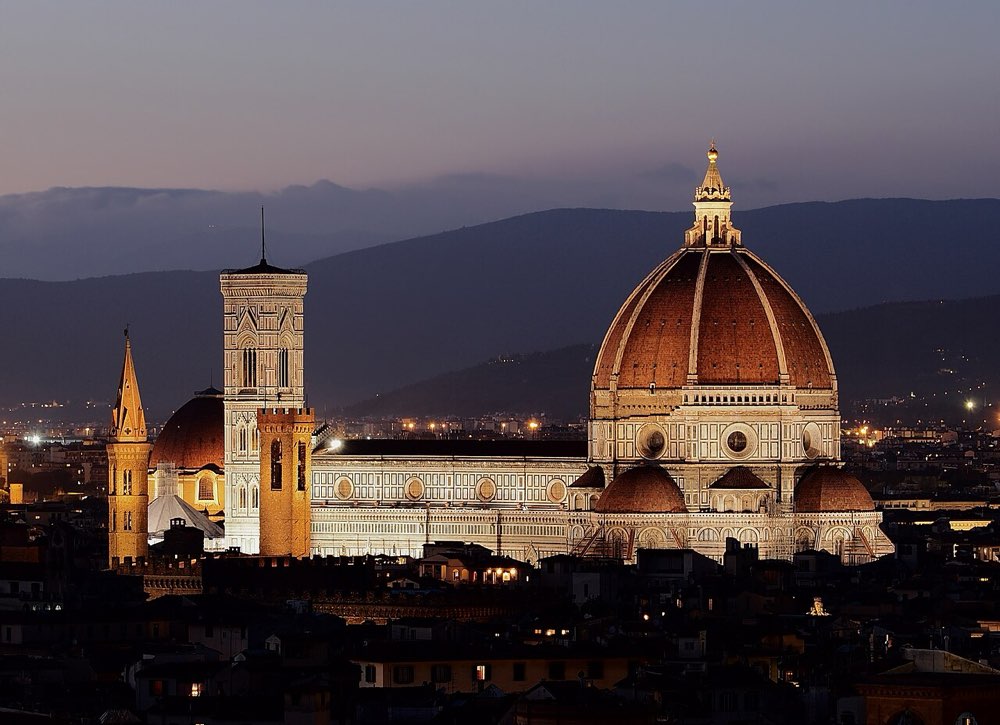
Why these two cities catch so many visitors
Rome and Florence are among the most common places for tourists to pick up a ZTL fine. Both have large, busy historic centres ringed by camera-controlled gates, heavy tourist traffic, and layouts that make it easy to drift into a restricted street while you are hunting for your hotel. The good news is that the same rule works in both: don’t drive into the centre — park on the edge and walk or take transit in.
Florence
Florence’s ZTL covers essentially the whole historic centre, and it is tightly enforced, with extended evening hours on summer weekends. The centre is also compact and very walkable, so there is little reason to drive in even if you could. Practical approach:
- Leave the car at a car park or park-and-ride on the edge of the centre and walk in — the historic core is small.
- If your hotel is inside the ZTL, arrange plate registration with it in advance.
- Watch for the round Zona Traffico Limitato signs at every approach to the centre.
Check the exact zone on our Florence ZTL map before you arrive.
Rome
Rome has several ZTLs, not one — the Centro Storico zone plus others such as Trastevere, San Lorenzo and Testaccio, each with its own hours, some operating into the night. Because the zones are spread across the city, it is easy to enter one without realising. Practical approach:
- Avoid driving in the centre altogether; Rome’s traffic is heavy and central parking scarce.
- Use a park-and-ride near a Metro station on the outskirts and take the Metro in — often faster than driving.
- If you must reach a central hotel, confirm it can register your plate and which zone it sits in.
See the zones on our Rome ZTL map.
The shared playbook
- Park outside the centre. Both cities are best explored on foot or by transit.
- Check the zone the night before on the ZTL map and pick a car park outside it.
- Sort hotel access in advance if you are staying inside a zone.
- Don’t trust the sat-nav to keep you out — it will happily route you through the centre.
For the full background, read our complete guide to driving in Italy and how ZTL cameras work.
Rome: not one zone but several
Rome does not have a ZTL. It has around half a dozen of them, laid over one another across the centre, each with its own boundary, its own hours and its own logic — and on top of those, a city-wide emissions zone covering everything inside the ring road. It is the most complicated restricted-traffic arrangement in Italy, and it is not one you can reason your way through from the driving seat.
The zones cover the historic centre and the districts around it, and their hours differ from one another. Some are daytime restrictions on weekdays; others extend into the evening, particularly in the nightlife districts where the purpose is to keep cars out while the streets are full of people.
What this means in practice is simple even though the regulations are not: do not drive into central Rome. There is no itinerary that is improved by it, parking is scarce and expensive where it exists at all, and the city has one of the better public transport networks in Italy for getting around the middle. See ZTL Rome for the detail.
Florence: one ring, twenty gates
Florence is the city where visitors are fined most often, and its arrangement is the opposite of Rome’s — a single well-defined zone, very heavily enforced. The boundary is the viali, the ring of wide avenues built over the line of the medieval walls, plus a section across the river on the Oltrarno side. Everything inside that ring is restricted.
The zone is divided into lettered sectors, which matter to permit holders and not to you. What matters to you is the number of camera gates around the ring — roughly twenty — and the fact that they sit where smaller streets meet the avenues, which is precisely where a sat-nav will turn you off.
Florence is compact. The Duomo, the Signoria, the Uffizi and the Ponte Vecchio are all within a few minutes’ walk of one another. There is no practical benefit to being inside the ring in a car, and a substantial risk. See ZTL Florence.
Where to actually leave the car
For Florence, the intended answer for anything longer than a couple of hours is the Villa Costanza park-and-ride, out where the A1 motorway meets the city, with a tram running from it into the centre. It is purpose-built for this, it keeps you out of Florentine traffic entirely, and it is considerably cheaper than a central garage. Paid garages also ring the edge of the centre, most of them a ten- to twenty-minute walk from the main sights.
For Rome, park outside the centre and use the metro, or do not bring the car into the city at all. If you are collecting a hire car for onward travel, consider picking it up on the day you leave rather than on arrival — a car sitting in a Roman garage for three days is an expensive way to store luggage.
In both cities, remember that white-lined street spaces near the centre are usually reserved for residents even where they look free. Blue lines are paid; read the sign for the hours.
Driving between the two
The A1 runs directly between Rome and Florence and takes roughly three hours, tolled, collecting a ticket on entry and paying on exit. The train does it faster — well under two hours on the fast services, city centre to city centre, with no parking problem at either end.
That comparison is worth taking seriously. For a Rome–Florence trip with nothing in between, the car is slower, more expensive once parking is counted, and adds the ZTL risk at both ends. The case for driving is the country in between: Orvieto on its cliff, the hill towns of Umbria and southern Tuscany, Siena, Cortona, Montepulciano. If that is the trip, hire the car; if it is not, take the train.
Staying inside the zone in either city
Plenty of hotels in both cities are inside the restricted area, and this is a solvable problem rather than a reason to book elsewhere. Properties can register a guest’s number plate with the Comune for temporary access to reach the door and unload.
It has to be arranged in advance, with the plate exactly as printed, the country of registration and your arrival date. A booking confirmation is not authorisation and cannot be presented to a camera. And if the rental desk hands you a different car from the one you booked, the registered plate is now wrong — send the new one before you drive away. Staying at a hotel inside a ZTL sets out the whole process.
Ask where the car goes afterwards, too. Access to unload is not a parking space, and in both cities the answer is almost always a garage outside the zone.
The short version
- Rome: multiple overlapping zones plus a city-wide emissions zone. Do not drive into the centre.
- Florence: one zone bounded by the viali, about twenty camera gates. Use Villa Costanza and the tram.
- Between them: the train is faster unless you are stopping in the countryside.
- Staying inside a zone: register the plate in advance, and re-send it if your car is swapped.
- Check both cities on the ZTL map before you travel.
Arriving by air with a hire car
Both cities put the risk right at the start of the trip, because the airport is where you collect the car and the hotel is where you point the navigation. Florence’s airport sits close to the city on the north-western side, which means a very short drive between picking up an unfamiliar vehicle and arriving at the edge of a heavily gated zone — not much time to settle in before the decision matters.
Rome’s two airports are further out, which helps, but the motorway from Fiumicino delivers you towards the city with the same problem waiting at the other end. In both cases the fix is the same and should be done before you land: decide which car park you are driving to, save it as the destination, and treat the hotel address as somewhere you walk to afterwards.
If the rental desk gives you a different car from the one you booked — which is routine — and a property has registered your plate for access, read the plate off the vehicle and send the new one before leaving the car park. That two-minute check is the difference between an authorised arrival and a fine that turns up months later.
Check your destination before you drive.
Open the interactive ZTL mapMore driving guides
- Driving in Italy: the complete guide to ZTL zones
- ZTL fines in Italy: cost, how they reach you, and how to contest them
- How ZTL cameras work — and why rental cars always get caught
- ZTL signs in Italy: what they look like and what they mean
- Italy’s Euro 5 diesel ban from 1 October 2026: where it really applies
- How to avoid a ZTL fine: parking and route planning in Italy
- Renting a car in Italy: the complete guide (ZTL, tolls, fuel & permits)
- Italy’s driving zones explained: ZTL, Milan’s Area C & Area B, and LEZs
- Staying at a hotel inside a ZTL: how to reach it without a fine
- Blue Badge and ZTL zones: driving in Italy
- Tuscany road trip: ZTLs, parking and routes
- Lake Garda by car: ZTLs on all three shores
- Puglia road trip: ZTLs from Bari to Lecce
- Sicily road trip: ZTLs from Palermo to Siracusa
- Driving in Milan: Area C, Area B and the streets no ticket opens
- Naples and the Amalfi Coast: ZTLs, plate days and where the car stops