Blue Badge and ZTL zones: driving in Italy
A UK Blue Badge or EU disabled permit does give you the right to drive into most Italian ZTLs. It does not stop the camera from fining you — and closing that gap is a separate job, done town by town, before you travel.
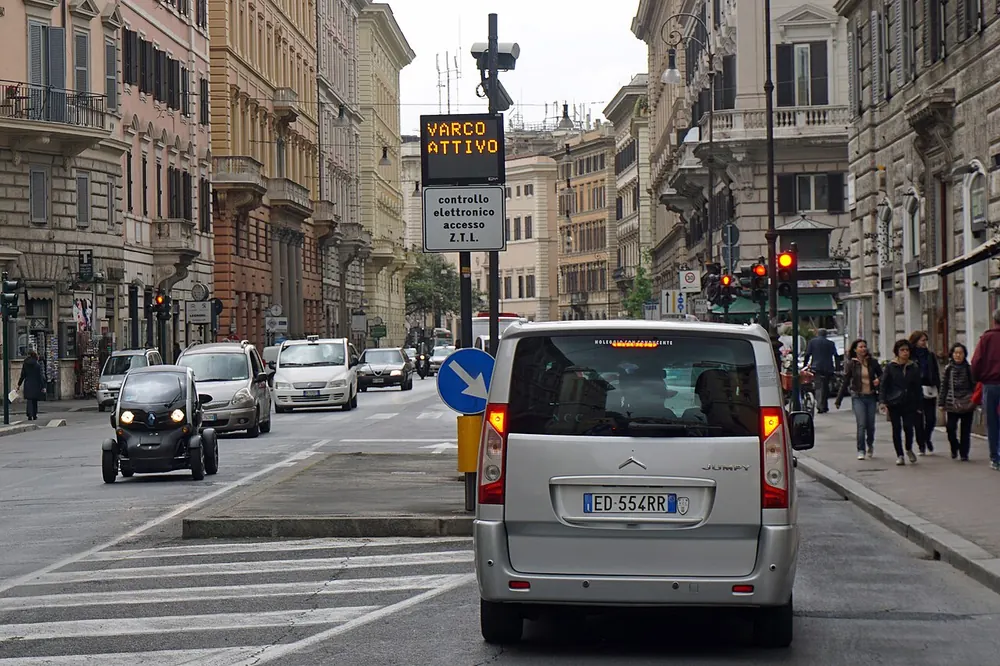
The short answer
Yes — a valid disabled badge, whether a UK Blue Badge or the EU-model Italian CUDE, normally entitles you to drive and stop inside an Italian ZTL. But two entirely separate things have to be true before that is safe, and visitors routinely get the first one right and the second one wrong:
- The legal right. Italian law grants badge holders access to restricted zones, subject to one condition explained below.
- The administrative step. The enforcement camera cannot see your badge. Unless your registration plate is on the comune’s permitted list, the system records an ordinary violation and a fine follows.
The badge on the windscreen settles the first. Only the comune can settle the second, and there is no single place to do it for the whole country.
What the law actually grants
The right comes from DPR 503/1996, articles 11 and 12 (summarised by the Italian government’s guide to using the contrassegno). Vehicles serving a badge holder may circulate and stop in zone a traffico limitato and in aree pedonali urbane — pedestrian zones — provided the comune has authorised access for at least one category of vehicle performing a public-utility transport service. In practice almost every Italian centre lets in taxis, buses, ambulances or licensed deliveries, so the condition is usually met. It is not guaranteed: where a zone admits nothing at all, the exemption does not apply.
The same article extends the right to bus and taxi lanes, which is worth knowing in the larger cities where those lanes run right through the restricted centre.
Two limits matter more than people expect. The badge is personal, not vehicular: it belongs to the disabled person, works in any car regardless of who owns it, and is valid only while the holder is actually on board, whether driving or being driven. And the original must be displayed face-up on the dashboard — a photocopy is not a badge, and using one is treated as a serious matter rather than a technicality.
Note that a pedestrian area is a different animal from a ZTL, and our site marks the two apart for that reason. A ZTL has a timetable you can wait out. A pedestrian area generally does not. See Italy’s driving zones explained for how the categories differ.
Is a badge from another country valid here?
If your badge follows the EU standard model — the blue card set out in Council Recommendation 98/376/EC, which is what member states issue — it is recognised in Italy on the same terms as the Italian CUDE. The EU’s Your Europe guidance on the parking card sets out the principle and its limits. Italy’s own badge has followed that model since 2012, and the mutual recognition runs both ways across the EU.
UK Blue Badges are a weaker case, and it is worth being honest about it. The UK Department for Transport’s own country-by-country guidance lists Italy as accepting non-EU parking cards in some regions only, and advises checking locally before travelling. The badge looks the part and is widely honoured in practice, but recognition is a local decision rather than a guaranteed one. If you hold a UK badge and your trip depends on centre access, confirm it with the specific comune rather than assuming.
Whatever the badge, recognition is about your right to be there. It is not a substitute for getting the plate registered.
Why the camera fines you anyway
An Italian ZTL gate is a plate reader. It photographs every vehicle that crosses, reads the number, and checks it against a list of plates authorised for that zone. Nothing in that process involves a human being, a windscreen or a badge. If your plate is not on the list, the crossing is logged as a violation exactly as it would be for anyone else — once a day for each zone you enter, under the rule in force since December 2024. Our guide to how ZTL cameras work covers the mechanics.
This is the entire problem. The exemption exists in law; the camera implements it as a database entry; and only the comune can put you in that database.
Getting your plate onto the list
Italy has been building a national fix. The Piattaforma Unica Nazionale CUDE, run by the transport ministry and live since May 2022, lets a badge holder register one active plate and one reserve, after which participating comuni can recognise the plate automatically without being contacted individually.
It is genuinely useful and it is also, for a visitor, mostly beside the point. Registration goes through the comune that issued your badge, which rules out a foreign badge. Participation by comuni is voluntary and take-up has been slow — early counts ran to a couple of dozen municipalities nationally, and the Portale dell’Automobilista publishes the current list. Anywhere that has not joined, the old method still applies.
So for a visitor the practical route is the old one: contact each comune whose centre you intend to drive into, before you go. The procedures vary, and three of the biggest give a fair picture of the range:
- Florence runs one of the clearer systems. Non-residents can notify a short visit — up to fifteen days — by phone or email to Servizi alla Strada, giving the plate, the badge number, its expiry, the issuing authority and the holder’s details, with a copy of both sides of the badge. It can be done within 48 hours of entering rather than strictly in advance. Longer or repeat access goes through an online form instead. Foreign badges follow the same route as out-of-town Italian ones.
- Rome handles foreign-issued badges as a separate case, by written application to Roma Servizi per la Mobilità with the form, a copy of the badge and photo ID. Romans register plates online with a digital identity, which visitors will not have. Rome also now distinguishes a primary from a secondary plate, and only the primary carries ZTL access — so check which one you are on.
- Milan requires the plate to be registered in advance for its Area C, Area B and the central ZTL alike, with the badge displayed and the holder aboard. The exemption is not automatic and does not switch off other restrictions that may apply to the vehicle.
Smaller towns are often easier than this makes it sound: an email or a phone call to the polizia locale or the comando di polizia municipale, a few days ahead, in whatever Italian you can manage, usually does it. Keep the reply.
When the car is a rental
Nothing about a hire car changes your entitlement. The badge is yours, it works in any vehicle, and there is no requirement that you own or even drive the car. What changes is the paperwork, in three ways.
Register the plate off the actual vehicle, not the booking. Rental desks substitute cars constantly, and every registration you have arranged is tied to the plate you gave. Read it off the car in the car park, photograph it, and send corrections before you drive.
Prefer the short-stay routes. Where a comune offers a temporary notification — Florence’s fifteen-day window is the model — that path suits a rental far better than a permanent permit, which may ask for the vehicle registration document you do not have.
Remember the fine takes the long way home. If one is issued, it goes to the registered keeper, which is the rental company, which charges it to your card with an administration fee on top, often months later. That is a poor position from which to explain that you held a valid badge. ZTL fines explained covers the route in detail.
If a fine arrives anyway
You are on stronger ground than the notice suggests. Italy’s Court of Cassation has repeatedly held that the substantive right of access comes from the badge, and that failing to pre-register a plate is an administrative shortfall which does not make a lawful entry unlawful — a line running through judgment 21320 of 2017 and later rulings, which have annulled fines issued to badge holders on exactly that basis.
Be realistic about what using that is like. Contesting an Italian municipal fine from abroad means correspondence in Italian, tight deadlines counted from a notice that reached you late, and a rental company that has already taken the money. The ruling is a backstop worth knowing about, not a plan. Registering the plate in advance costs one email.
Parking is a separate question
Badge rights at the kerb are not the same as badge rights at the gate, and it is easy to conflate them. Broadly, a recognised badge lets you use marked disabled bays anywhere in Italy, and comuni commonly extend it to paid bays and some restricted ones — Florence, for instance, allows non-resident badge holders into blue-line paid parking and white-line resident bays. But these are local rules with local exceptions, and signage overrides any general expectation. Our guide to parking outside the zone covers the colour conventions.
One thing worth saying plainly: even with full access rights, driving into a medieval centre is frequently the worse option. The streets are narrow, the surfaces are rough, turning is difficult and parking inside may be no closer to your destination than a bay at the edge. The badge gives you a choice, not an obligation.
Before you go
- Check your badge is the EU standard model — a UK Blue Badge included — and unexpired; carry the original, displayed face-up.
- List every town you will drive into — the ZTL map will tell you which have zones — and contact each comune ahead of time.
- Register the plate that is actually on the car, and re-send it if the rental desk swaps the vehicle.
- Keep every confirmation, email and reference number until well after the trip.
- Remember the badge only works with the holder on board.
- If in doubt about a specific zone, ask the comune. Rules here are local, and they change.
This guide explains how the system works; it is not legal advice, and the arrangements described are set by individual comuni and can change without notice. Confirm the current procedure with the relevant municipality before you travel.
Check your destination before you drive.
Open the interactive ZTL mapMore driving guides
- Driving in Italy: the complete guide to ZTL zones
- ZTL fines in Italy: cost, how they reach you, and how to contest them
- How ZTL cameras work — and why rental cars always get caught
- ZTL signs in Italy: what they look like and what they mean
- Italy’s Euro 5 diesel ban: postponed to 1 October 2027, and what still applies
- Does Google Maps avoid ZTLs in Italy? Waze and Apple too
- How to avoid a ZTL fine: parking and route planning in Italy
- Renting a car in Italy: the complete guide (ZTL, tolls, fuel & permits)
- Italy’s driving zones explained: ZTL, Milan’s Area C & Area B, and LEZs
- Staying at a hotel inside a ZTL: how to reach it without a fine
- Driving in Rome & Florence: ZTL and parking survival guide
- Tuscany road trip: ZTLs, parking and routes
- Lake Garda by car: ZTLs on all three shores
- Puglia road trip: ZTLs from Bari to Lecce
- Sicily road trip: ZTLs from Palermo to Siracusa
- Driving in Milan: Area C, Area B and the streets no ticket opens
- Naples and the Amalfi Coast: ZTLs, plate days and where the car stops